
Chao He (何超,北京交通大学). I am currently pursuing a doctoral Degree in Vehicle Operation Engineering at Beijing Jiaotong University, under the supervision of Professor Hongmei Shi (史红梅) in the research group group led by Professor Zujun Yu (余祖俊). I was selected into the First Batch of the Doctoral Program under the Young Talent Support Project of the China Association for Science and Technology (China Instrument and Control Society). My research direction is Vehicle Safety, Detection and Control Technology (interpretable fault diagnosis). I have published a total of 16 papers, including 8 as the first author (including student first author). I preside over 1 independent research project (for doctoral students) of the Frontier Research Center and have participated in 4 horizontal and vertical research projects. Also, I serve as a reviewer for 31 international top journals and conferences. I participate in the operation of a WeChat official account named Frontiers of Measurement, Control and Operation & Maintenance for Advanced Mechatronic Systems (《先进机电系统测控与运维前沿》).
🚀 Research Direction
- Interpretable Fault Diagnosis
- Anomaly Detection in Non-Ideal Industrial Scenarios
- Gait Recognition
❤️ Academic Homepage
Github 
🔥 News
- 2025.07: 🎉🎉 We have one paper recognized as ESI Highly Cited Paper.
- 2025.05: 🎉🎉 We have released the Awesome-large-language-model-for-Prognostics-and-health-management that collects articles on the application of Large Language Models (LLMs) in PHM.
- 2025.03: 🎉🎉 We have one paper recognized as ESI Highly Cited Paper.
- 2024.12: 🎉🎉 Selected into the First Batch of the Doctoral Program under the Young Talent Support Project of the China Association for Science and Technology (China Instrument and Control Society).
- 2024.11: 🎉🎉 We have one paper recognized as ESI Highly Cited & ESI Hot Paper.
- 2024.07: 🎉🎉 We have one paper recognized as ESI Highly Cited & ESI Hot Paper.
- 2024.04: 🎉🎉 We have one paper accepted by Advanced Engineering Informatics [CAS Tier 1].
- 2024.02: 🎉🎉 We have one paper accepted by Knowledge-Based Systems [CAS Tier 1].
- 2023.10: 🎉🎉 We have one paper accepted by Mechanical Systems and Signal Processing [CAS Tier 1].
- 2023.08: 🎉🎉 We have one paper accepted by Journal of Manufacturing Systems[CAS Tier 1].
- 2022.06: 🎉🎉 We have released the Journals-of-Prognostics-and-Health-Management that summarizes journals suitable for PHM-related submissions.
- 2021.10: 🎉🎉 We have one paper accepted by Measurement [CAS Tier 2].
📝 Publications
-
-



-
Abstract
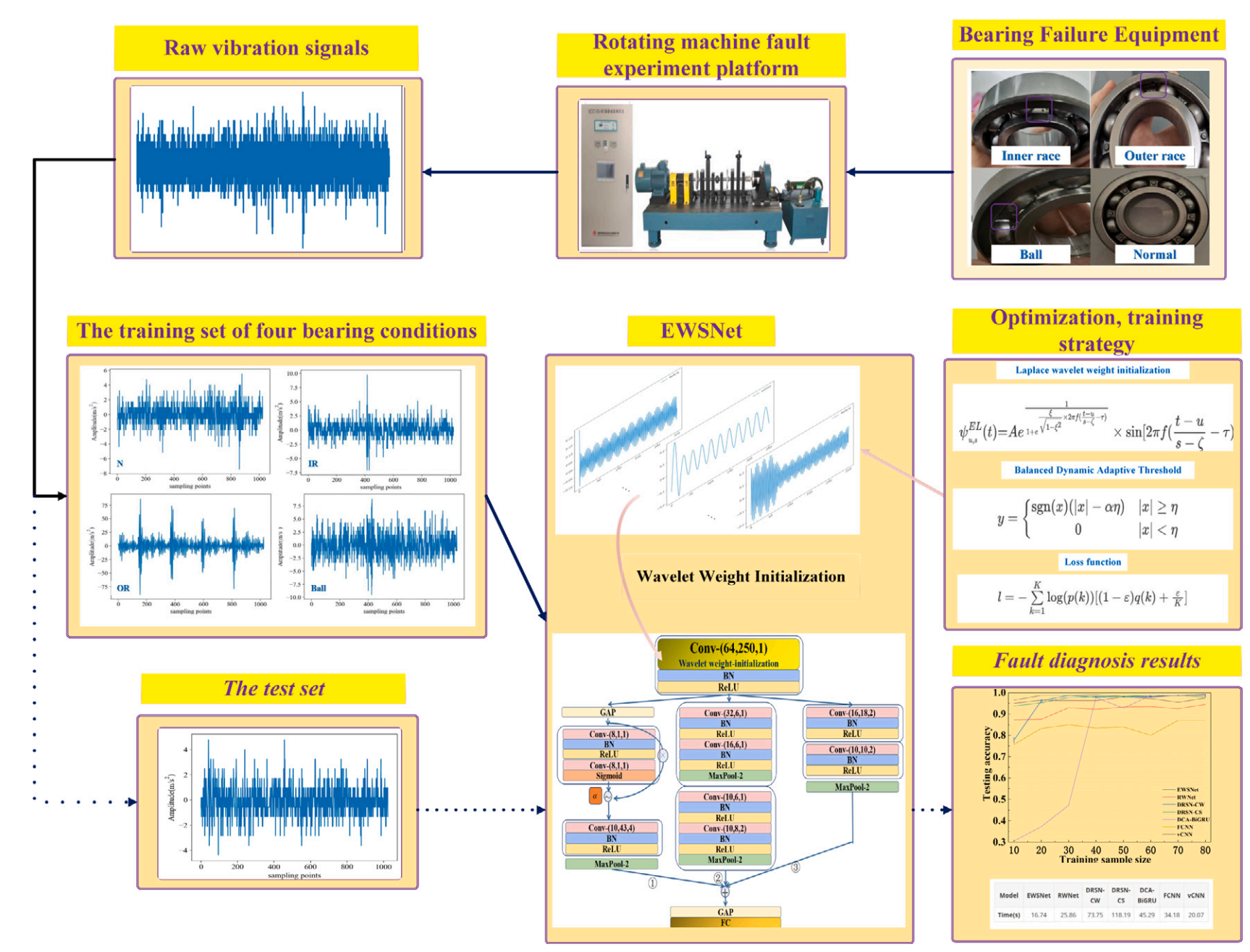
Intelligent fault diagnosis of rolling bearings using deep learning-based methods has made unprecedented progress. However, there is still little research on weight initialization and the threshold setting for noise reduction. An innovative deep triple-stream network called EWSNet is proposed, which presents a wavelet weight initialization method and a balanced dynamic adaptive threshold algorithm. Initially, an enhanced wavelet basis function is designed, in which a scale smoothing factor is defined to acquire more rational wavelet scales. Next, a plug-and-play wavelet weight initialization for deep neural networks is proposed, which utilizes physics-informed wavelet prior knowledge and showcases stronger applicability. Furthermore, a balanced dynamic adaptive threshold is established to enhance the noise-resistant robustness of the model. Finally, normalization activation mapping is devised to reveal the effectiveness of Z-score from a visual perspective rather than experimental results. The validity and reliability of EWSNet are demonstrated through four data sets under the conditions of constant and fluctuating speeds. Source code is available at: https://github.com/liguge/EWSNet.
-
BibTeX
@article{he2023physics,
 title={Physics-informed interpretable wavelet weight initialization and balanced dynamic adaptive threshold for intelligent fault diagnosis of rolling bearings},
 author={He, Chao and Shi, Hongmei and Si, Jin and Li, Jianbo},
 journal={Journal of Manufacturing Systems},
 volume={70},
 pages={579--592},
 year={2023},
 publisher={Elsevier}
 }
-
-
-
 (Coming soon!)
 -
Abstract
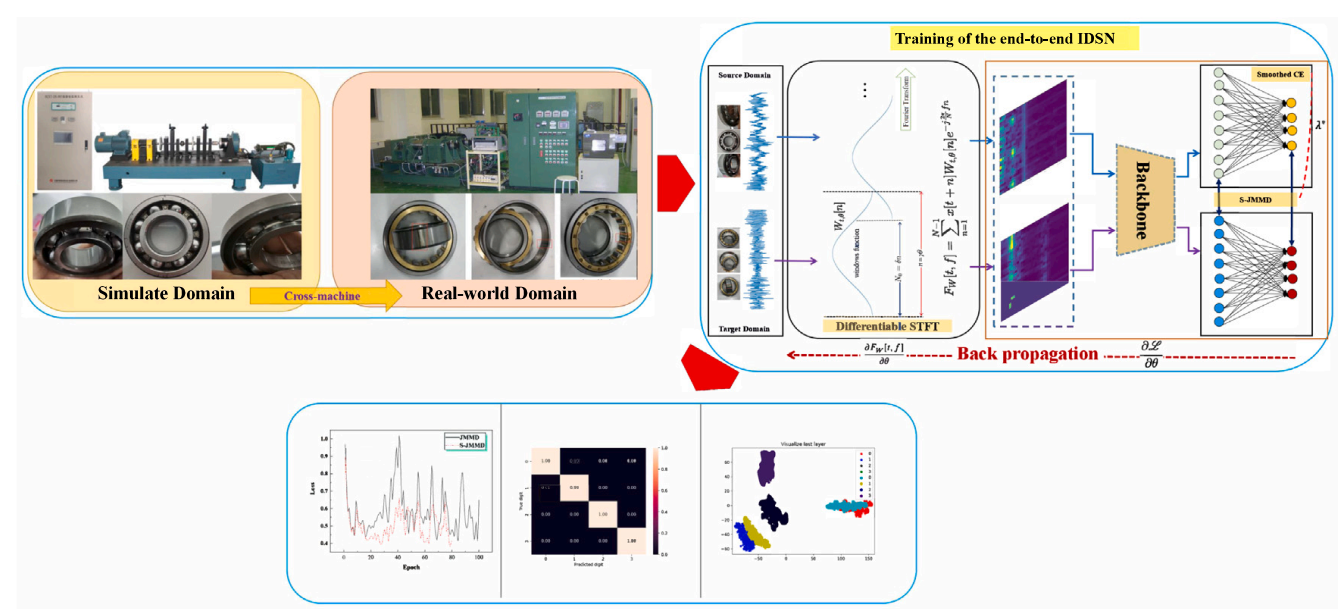
A surge of transfer fault diagnosis techniques has been proposed to guarantee the safe operation of traction motor systems. However, existing efforts highly depend on the availability of fault data in source domain, which is rare in practice due to the regular maintenance. Fortunately, self-customized testbeds provide an opportunity to easily obtain fault data, assuming that the simulated data can be utilized to monitor the real-world traction motor systems via the cross-machine diagnosis method. Besides, current deep learning-based cross-machine fault diagnosis methods suffer from the poor physical interpretability and the troublesome hype-parameter selection. To tackle aforementioned issues, a one-stage Interpretable and Differentiable STFT cross-machine dual-driven adaptation Network (IDSN) is proposed. In IDSN, a new paradigm termed interpretable differentiable STFT layer is devised, where a derivable coefficient is introduced to adjust pivotal parameters of STFT such as window length by the gradient descent. Prominently, it is a plug-and-play module, which can be embedded into the arbitrary typical network without conflict. Besides, a novel adaptive trade-off coefficient is developed to tackle the weight matching of the domain discrepancy metric. Finally, to ensure the reliability and effectiveness of cross-machine diagnosis, a concise yet valid smoothed joint maximum mean discrepancy is proposed, which simultaneously promotes intra-class compactness and inter-class separability. The results of experiments confirm that the proposed IDSN outperforms the state of the art.
-
BibTeX
@article{he2023idsn,
 title={IDSN: A one-stage interpretable and differentiable STFT domain adaptation network for traction motor of high-speed trains cross-machine diagnosis},
 author={He, Chao and Shi, Hongmei and Li, Jianbo},
 journal={Mechanical Systems and Signal Processing},
 volume={205},
 pages={110846},
 year={2023},
 publisher={Elsevier}
 }
-
-
Interpretable Physics-informed Domain Adaptation Paradigm for Cross-machine Transfer Diagnosis
-

-
Abstract
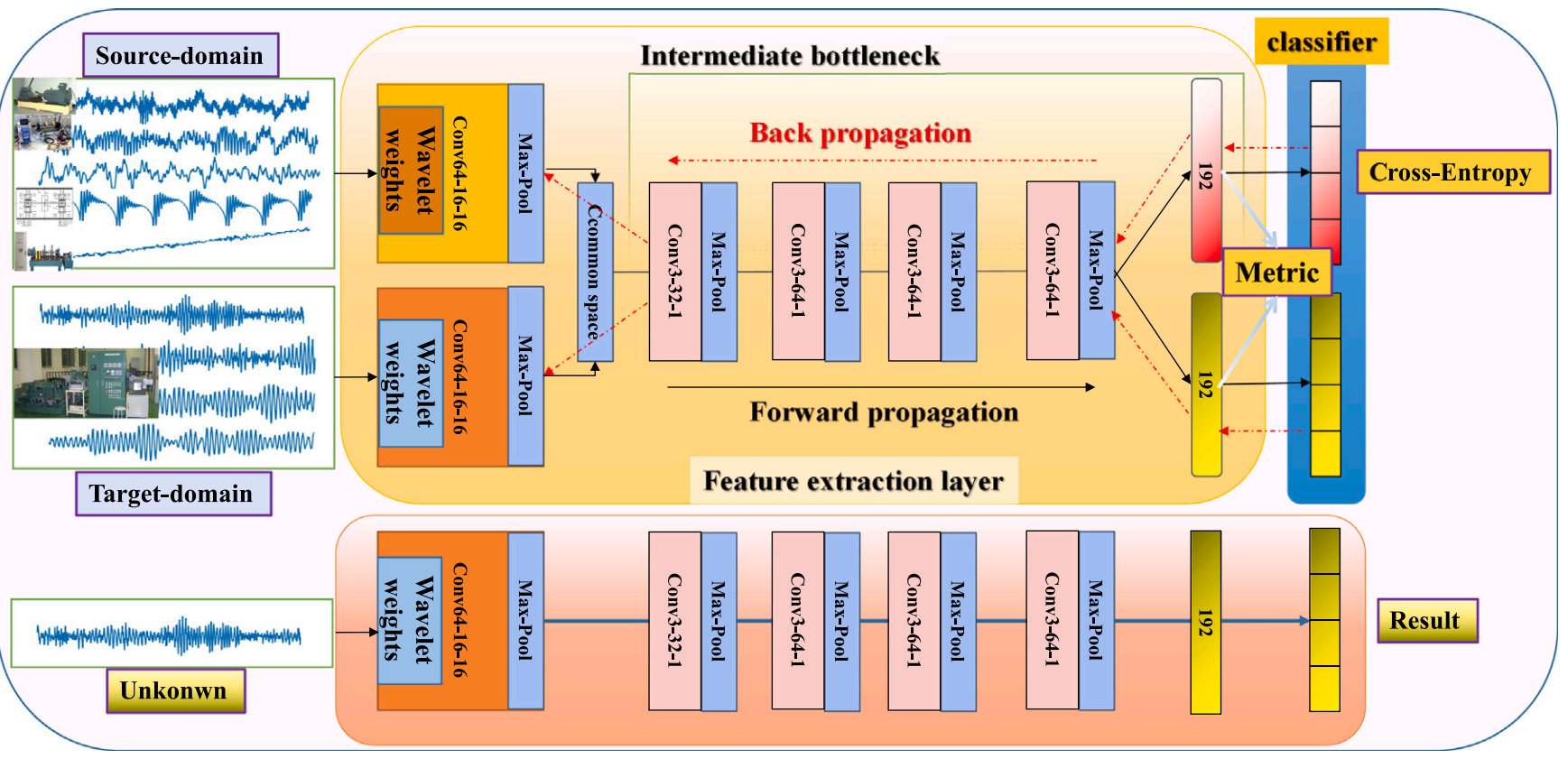
While transfer learning-based intelligent diagnosis has achieved significant breakthroughs, the performance of existing well-known methods still needs urgent improvement, given the increasingly significant distribution discrepancy between source and target domain data from different machines. To tackle this issue, rather than designing domain discrepancy statistical metrics or elaborate network architecture, we delve deep into the interaction and mutual promotion between signal processing and domain adaptation. Inspired by wavelet technology and weight initialization, an end-to-end, succinct, and high-performance physics-informed wavelet domain adaptation network (WIDAN) has been subtly devised, which integrates interpretable wavelet knowledge into the dual-stream convolutional layer with independent weights to cope with extremely challenging cross-machine diagnostic tasks. Specifically, the first-layer weights of a CNN are updated with optimized and informative Laplace or Morlet weights. This approach alleviates troublesome parameter selection, where scaling and translation factors with specific physical interpretations are constrained by the convolution kernel parameters. Additionally, a smooth-assisted scaling factor is introduced to ensure consistency with neural network weights. Furthermore, a dual-stream bottleneck layer is designed to learn reasonable weights to pre-transform different domain data into a uniform common space. This can promote WIDAN to extract domain-invariant features. Holistic evaluations confirm that WIDAN outperforms state-of-the-art models across multiple tasks, indicating that a wide first-layer kernel with optimized wavelet weight initialization can enhance domain transferability, thus validly fostering cross-machine transfer diagnosis.
-
BibTeX
@article{he2024interpretable,
 title={Interpretable physics-informed domain adaptation paradigm for cross-machine transfer diagnosis},
 author={He, Chao and Shi, Hongmei and Liu, Xiaorong and Li, Jianbo},
 journal={Knowledge-Based Systems},
 volume={288},
 pages={111499},
 year={2024},
 publisher={Elsevier}
 }
-
-
-


-
Abstract
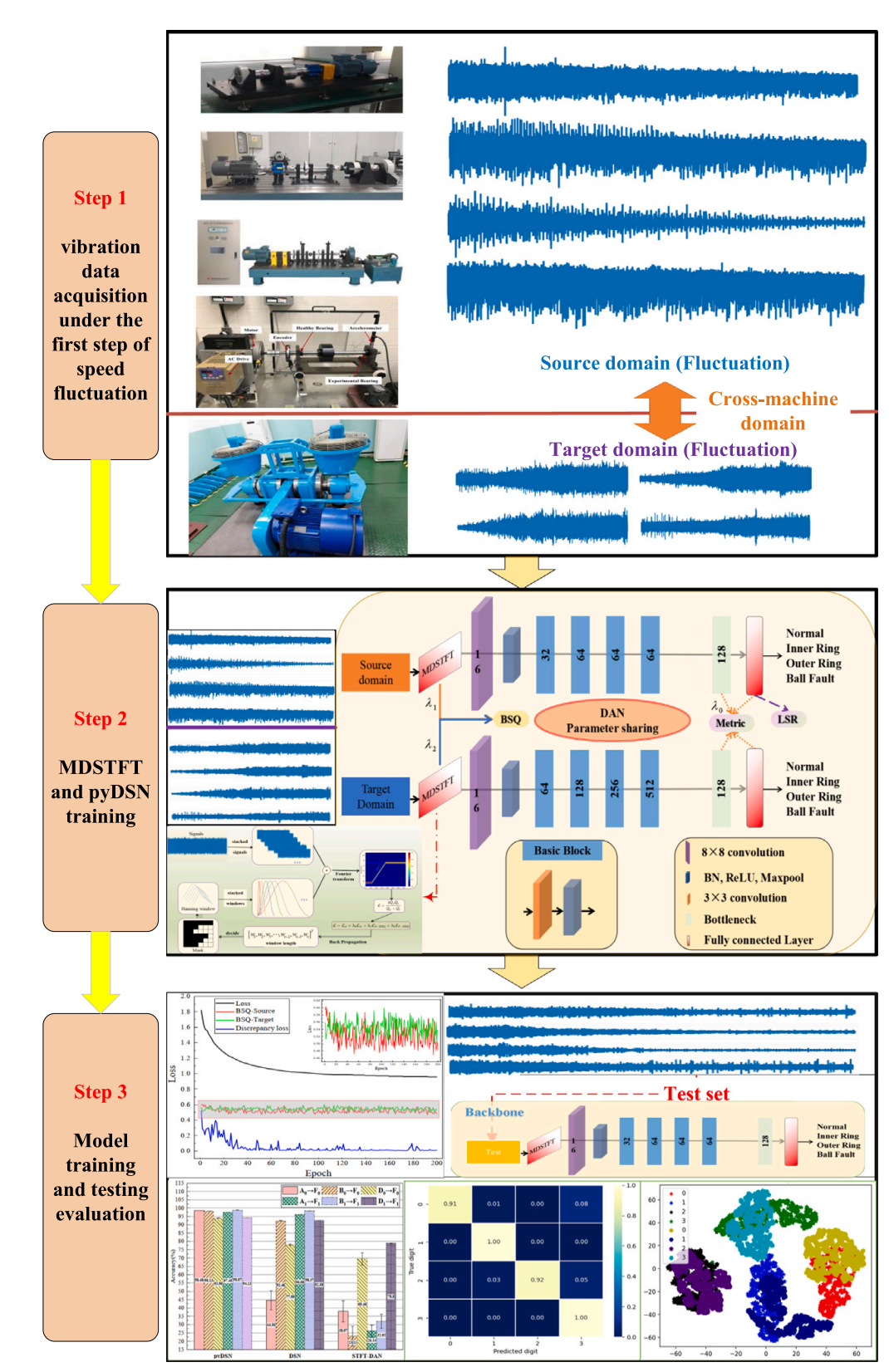
The service conditions of wheelset bearings has a direct impact on the safe operation of railway heavy haul freight trains as the key components. However, speed fluctuation of the trains and few fault samples are the two main problems that restrict the accuracy of bearing fault diagnosis. Therefore, a cross-machine transfer diagnosis (pyDSN) network coupled with interpretable modulated differentiable short-time Fourier transform (STFT) and physics-informed balanced spectrum quality metric is proposed to learn domain-invariant and discriminative features under time-varying speeds. Firstly, due to insufficiency in extracting extract frequency components of time-varying speed signals using fixed windows, a modulated differentiable STFT (MDSTFT) that is interpretable with STFT-informed theoretical support, is proposed to extract the robust time–frequency spectrum (TFS). During training process, multiple windows with different lengths dynamically change. Also, in addition to the classification metric and domain discrepancy metric, we creatively introduce a third kind of metric, referred to as the physics-informed metric, to enhance transferable TFS. A physics-informed balanced spectrum quality (BSQ) regularization loss is devised to guide an optimization direction for MDSTFT and model. With it, not only can model acquire high-quality TFS, but also a physics-restricted domain adaptation network can be also acquired, making it learn real-world physics knowledge, ultimately diminish the domain discrepancy across different datasets. The experiment is conducted in the scenario of migrating from the laboratory datasets to the freight train dataset, indicating that the hybrid-driven pyDSN outperforms existing methods and has practical value. Partial code is availble at https://github.com/liguge/PyDSN.
-
BibTeX
@article{he2024interpretable,
 title={Interpretable modulated differentiable STFT and physics-informed balanced spectrum metric for freight train wheelset bearing cross-machine transfer fault diagnosis under speed fluctuations},
 author={He, Chao and Shi, Hongmei and Li, Ruixin and Li, Jianbo and Yu, Zujun},
 journal={Advanced Engineering Informatics},
 volume={62},
 pages={102568},
 year={2024},
 publisher={Elsevier}
 }
-
- Under Review
- https://github.com/liguge/PIFCapsule
-
Fault diagnosis for small samples based on attention mechanism
-

-
Abstract
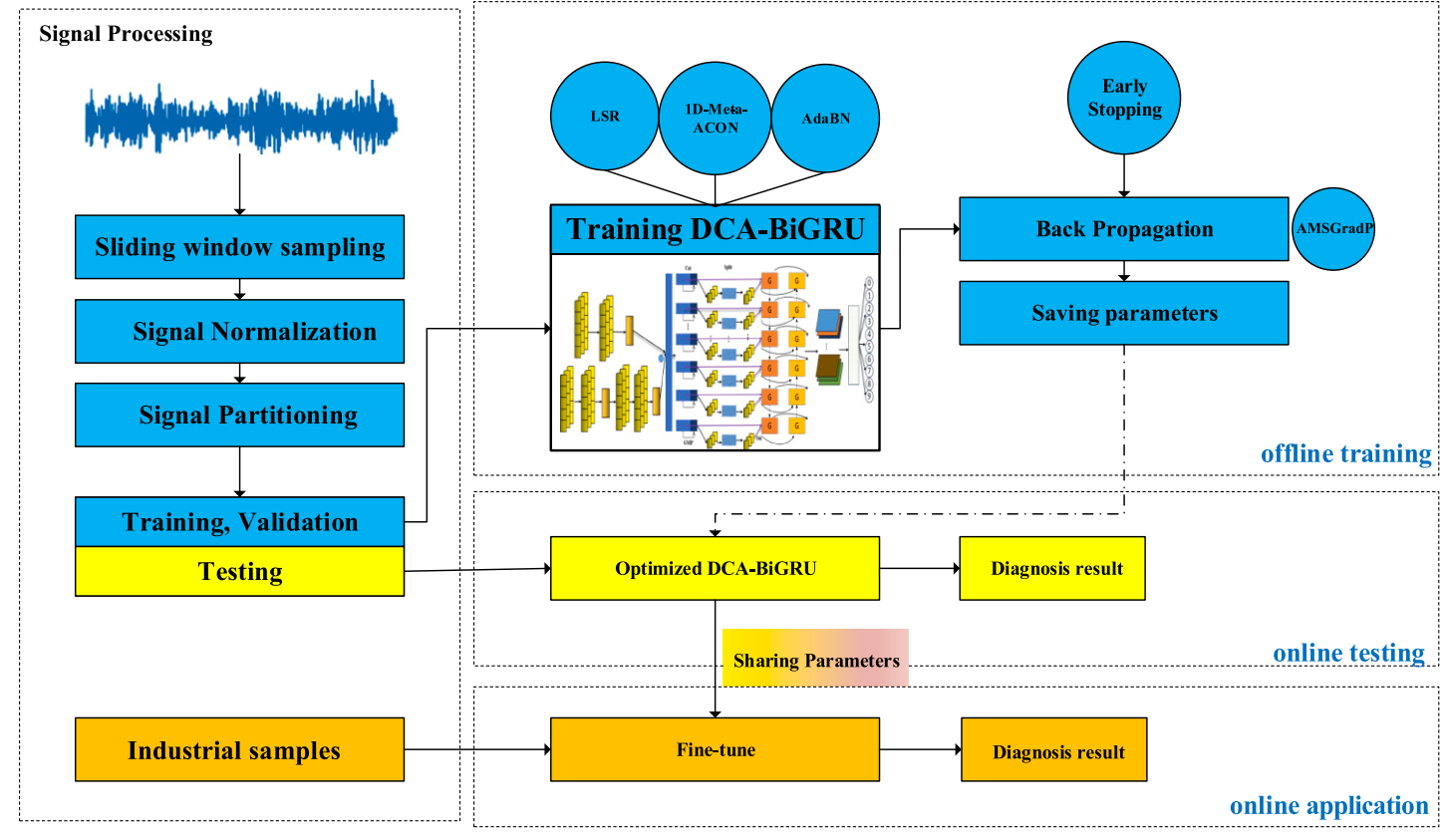
Aiming at the application of deep learning in fault diagnosis, mechanical rotating equipment components are prone to failure under complex working environment, and the industrial big data suffers from limited labeled samples, different working conditions and noises. In order to explore the problems above, a small sample fault diagnosis method is proposed based on dual path convolution with attention mechanism (DCA) and Bidirectional Gated Recurrent Unit (DCA-BiGRU), whose performance can be effectively mined by the latest regularization training strategies. BiGRU is utilized to realize spatiotemporal feature fusion, where vibration signal fused features with attention weight are extracted by DCA. Besides, global average pooling (GAP) is applied to dimension reduction and fault diagnosis. It is indicated that DCA-BiGRU has exceptional capacities of generalization and robustness by experiments, and can effectively carry out diagnosis under various complicated situations.
-
BibTeX
@article{zhang2022fault,
 title={Fault diagnosis for small samples based on attention mechanism},
 author={Zhang, Xin and He, Chao and Lu, Yanping and Chen, Biao and Zhu, Le and Zhang, Li},
 journal={Measurement},
 volume={187},
 pages={110242},
 year={2022},
 publisher={Elsevier}}
-


📖 Educations
2022.09 - Present, Vehicle Operation Engineering,Doctoral Candidate,Beijing Jiaotong University,Beijing, China. Supervisor: Hongmei Shi
2019.09 - 2022.06, Computer Application Technology, Master’s Degree, Liaoning University, Shenyang, China. Supervisor: Li Zhang
2015.09 - 2019.06, Computer Science and Technology, Bachelor’s Degree, Shandong University of Finance and Economics, Jinan, China.
🎖 Honors and Awards
- Outstanding Reviewer, Journal of IEEE Transactions on Instrumentation and Measurement (IEEE TIM), 2024
- Beijing Merit Student, 2024
- The Doctoral Program of the Young Talent Support Project of the China Association for Science and Technology (Chinese Society of Instrumentation), 2024
 Social Affiliations
- Student Member of China Instrument and Control Society
- Student Member of the China Computer Federation
- Technical Committee Member, IEEE_ICAIE 2025
- Reviewer for 31 International Journals and Academic Conferences, including ACM TAAS, TITS, TSMCA, MSSP, ADVEI, KBS, ESWA, TII, TIM, EAAI, ASOC, RESS, Neurocomputing, npj Digital Medicine, JVC, ERE, SHM, IEEE ACCESS, IEEE IOJT, IEEE Sensors J., TETCI, MST, IEEE_ICAIE 2025, JMSY, JNE, MLWA, NTE, SR, RIE, and Cyber-Physical Systems.
- Participate in the operation of a fault diagnosis-focused WeChat Official Account titled Frontiers of Measurement, Control and Operation & Maintenance for Advanced Mechatronic Systems
🤝Co-authored Articles
- Liao J X, He C, Li J, et al. Classifier-guided neural blind deconvolution: A physics-informed denoising module for bearing fault diagnosis under noisy conditions[J].Mechanical Systems and Signal Processing, 2025, 222: 111750.[CAS Tier 1]
- Liu B, Yan C, He C, et al. An interpretable physics-informed subdomain moment-enhanced adaptation network for unsupervised transfer fault diagnosis of rolling bearing[J]. Advanced Engineering Informatics, 2025, 67: 103491. [CAS Tier 1]
- Chen B, Liu T, He C, et al. Fault diagnosis for limited annotation signals and strong noise based on interpretable attention mechanism[J]. IEEE Sensors Journal, 2022, 22(12):11865-11880. [CAS Tier 2]
- Wei H, He C, Liu S, et al. Decoupling Machine and Operational Variances: A Spectral Attention Framework for Robust Few-Shot Cross-Machine Fault Diagnosis[J]. Structural Control and Health Monitoring, 2025. [CAS Tier 2]
- Li R, Shi H, He C, et al. Adaptive multi-scale Laplace wavelet weighted fusion framework for heavy haul freight train fault diagnosis under limited sample with high-noise[J]. Nondestructive Testing and Evaluation, 2025. [CAS Tier 2]
- Luo H, Zhang L, He C. Deep Diagnosis Methods for Industrial Equipment Systems[M]. Liaoning University Press, 2022.